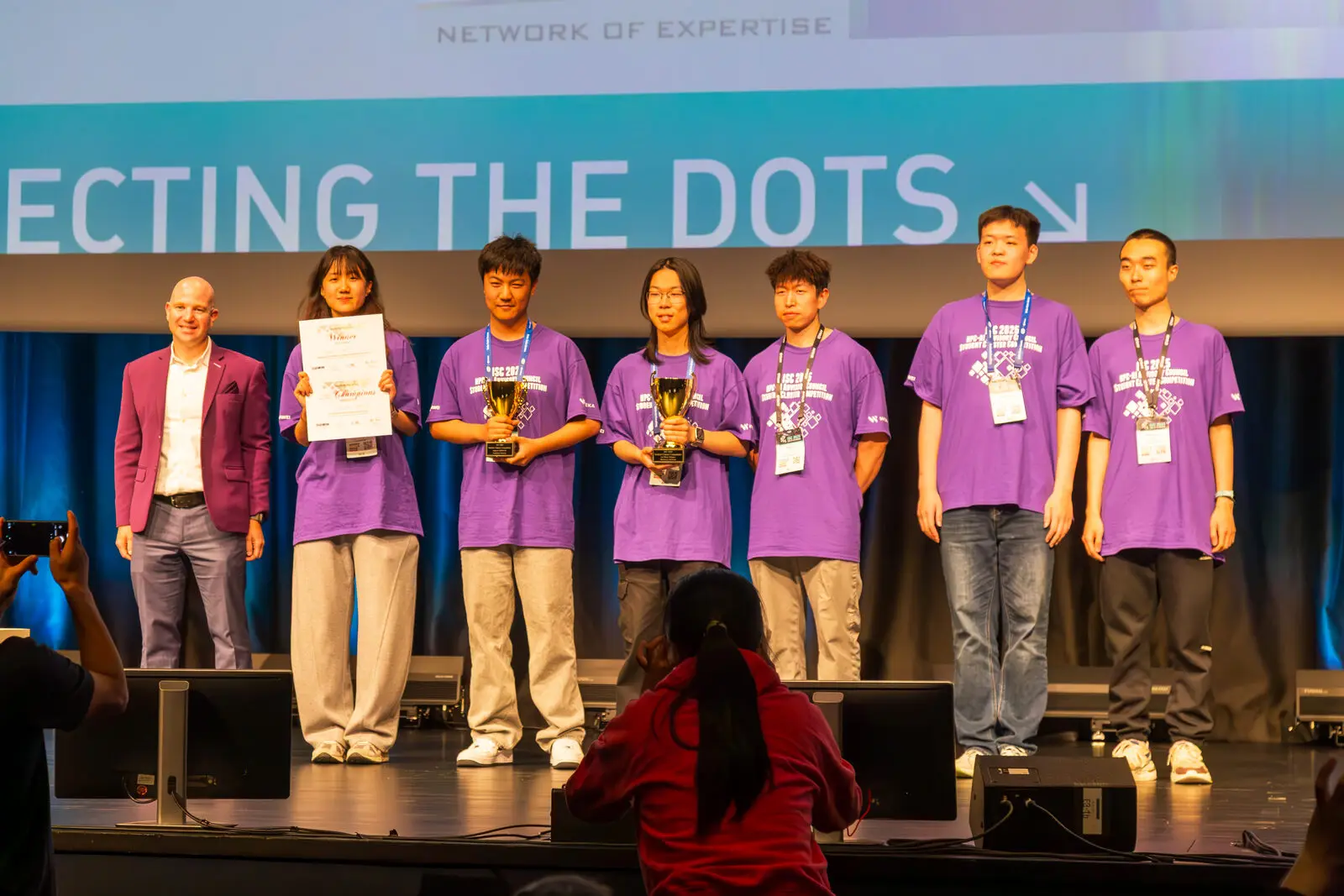
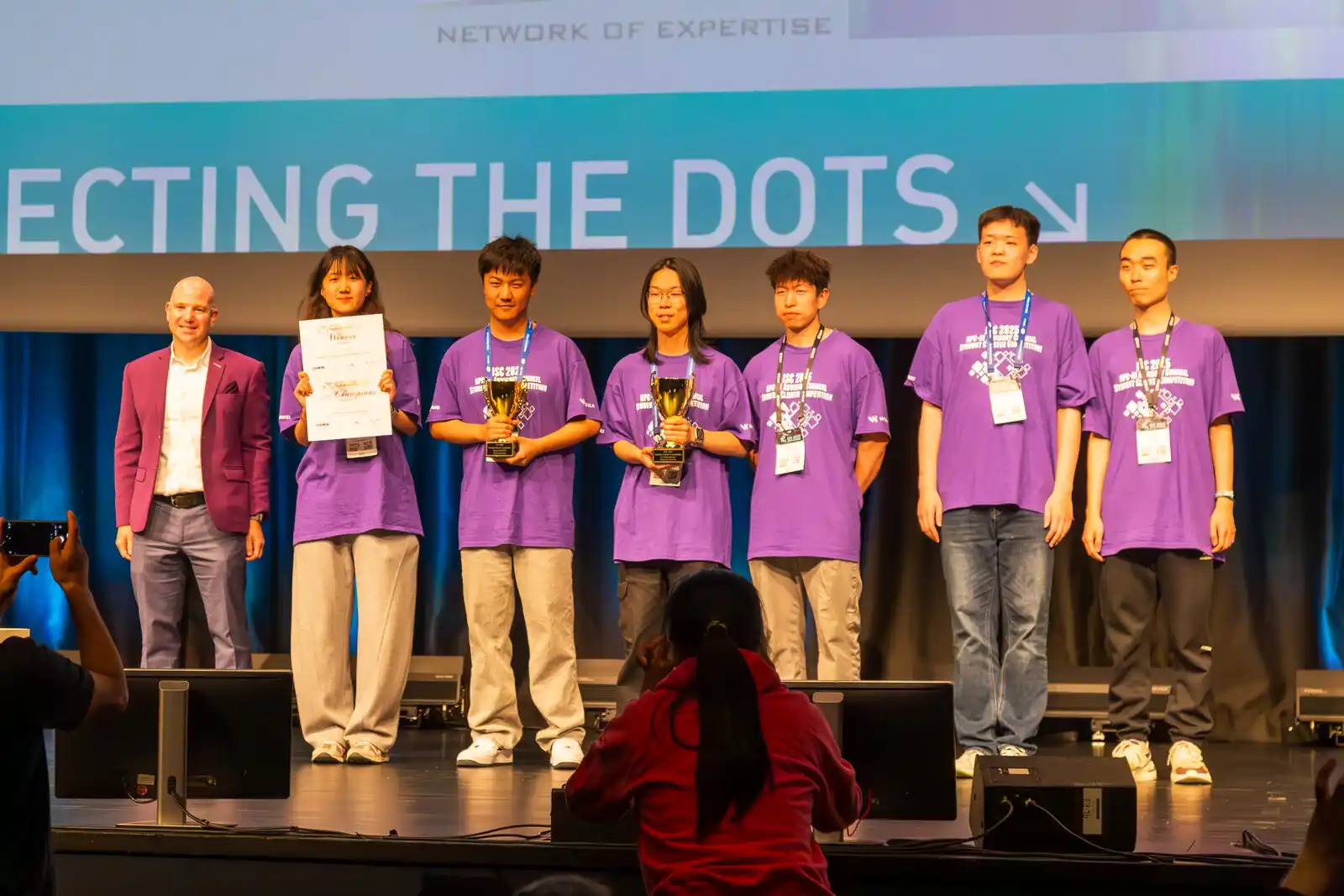
ISC 2025, Congress Center Hamburg, Germany
fifteen years, nineteen championships, two grand slams.
The only student team to have won all three major supercomputing competitions: ASC, ISC and SC.
News
From the team's WeChat account and the press.
29 August 2026
From the contest floor to the field: four days in Sichuan
The team went 2400 metres into the mountain at the China Jinping Underground Laboratory, compared training methods with the cluster team at Southwest Petroleum University, and visited the Chengdu Aircraft Industrial Group.
30 June 2026
A joint salon with the GRID satellite team
A morning on where high performance computing, AI and space astronomy meet: neutrino event reconstruction, cluster support for parallel AI inference, and an agent that automates gamma-ray burst analysis. Open to undergraduates from any background.
May 2026
November 2025
What the team does
Compete
A team of six races ASC, ISC and SC every season, the three major student cluster competitions, against universities from around the world.
Train
New members join each autumn with no prerequisites and learn systems, parallel programming and hardware from the members who competed before them.
Research
We work with research groups on real computational problems, from gamma-ray burst detection for the GRID satellites to mining genomic databases.
Publish and share
4 papers from the SC Reproducibility Challenge, and the team's tooling and write-ups in the open on GitHub.
How a competition works
The format is the same at ASC, ISC and SC.
Prepare for months
Once the applications are announced, members study the codes, tune them on the team’s own hardware and rehearse the run plan.
Build the cluster
On site the team assembles its nodes within a fixed power budget. Going over it costs points, so every watt is planned.
Run for days
Benchmarks first, then the scientific applications, including a secret application revealed on the competition floor.
Present and defend
Judges interview the team and score the results, the presentation and how the work was documented.
Championship years
Gold marks a year with at least one championship. A ring marks a grand slam, when the team won ASC, ISC and SC in the same year.
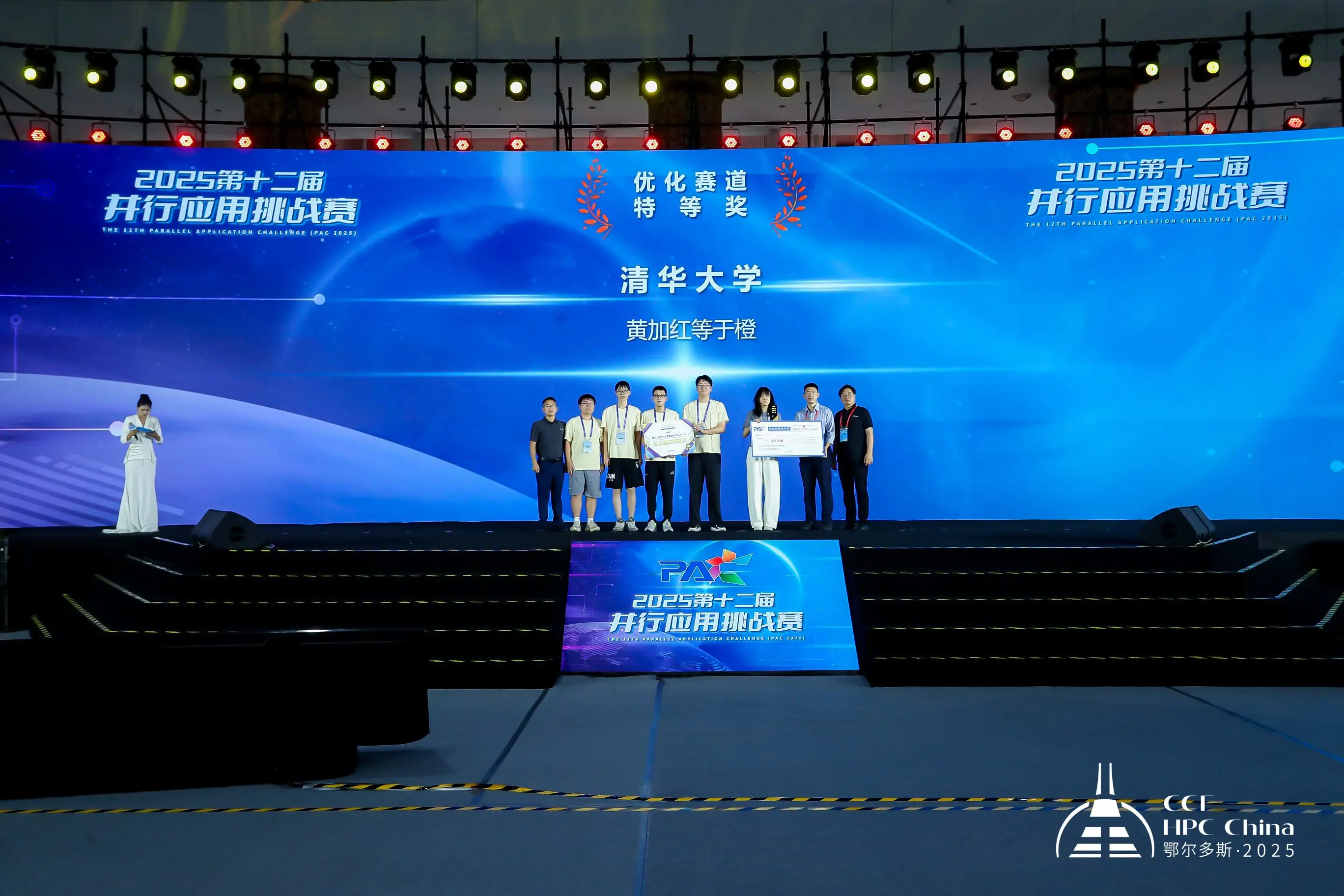
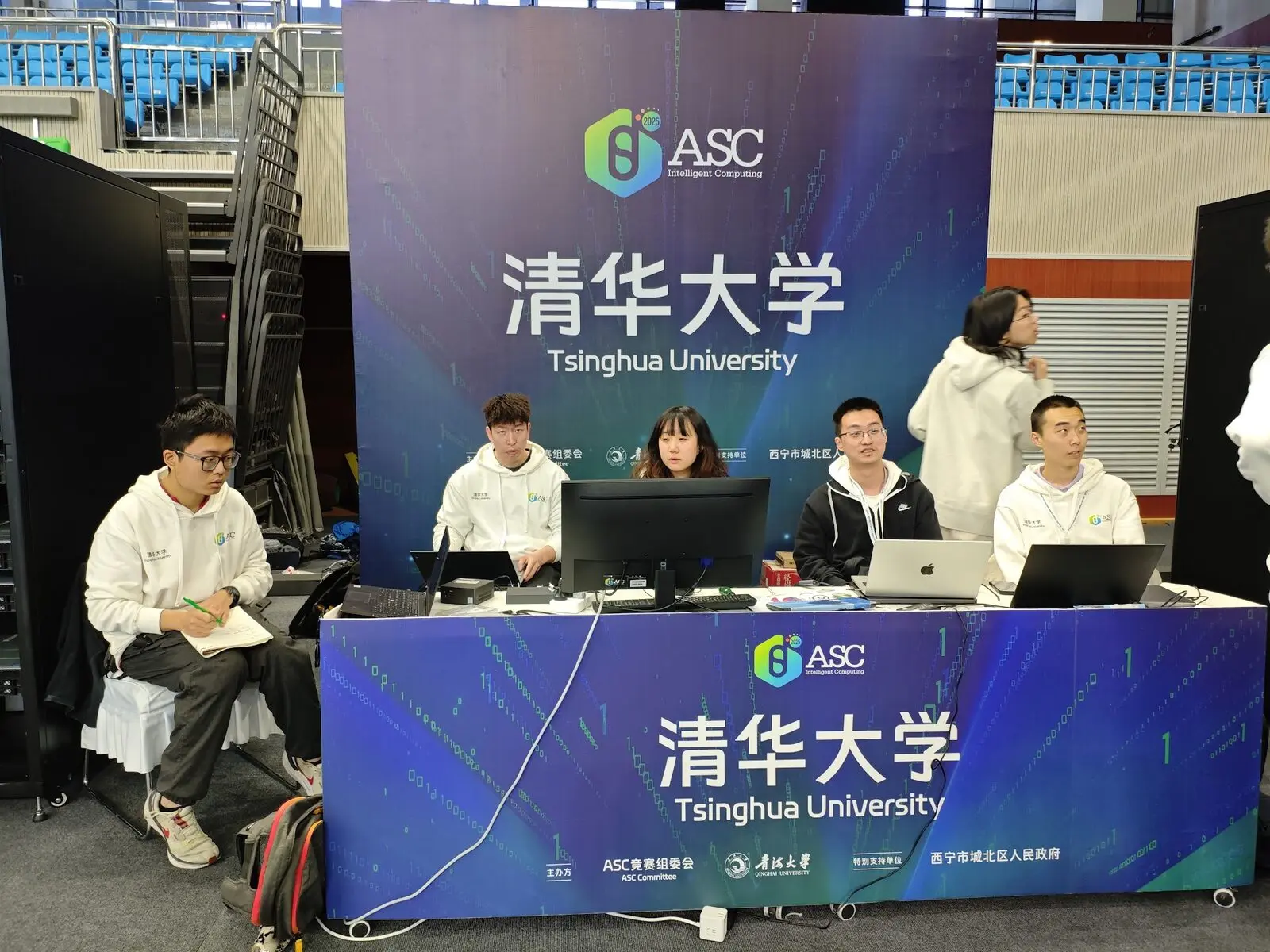
Recent competitions
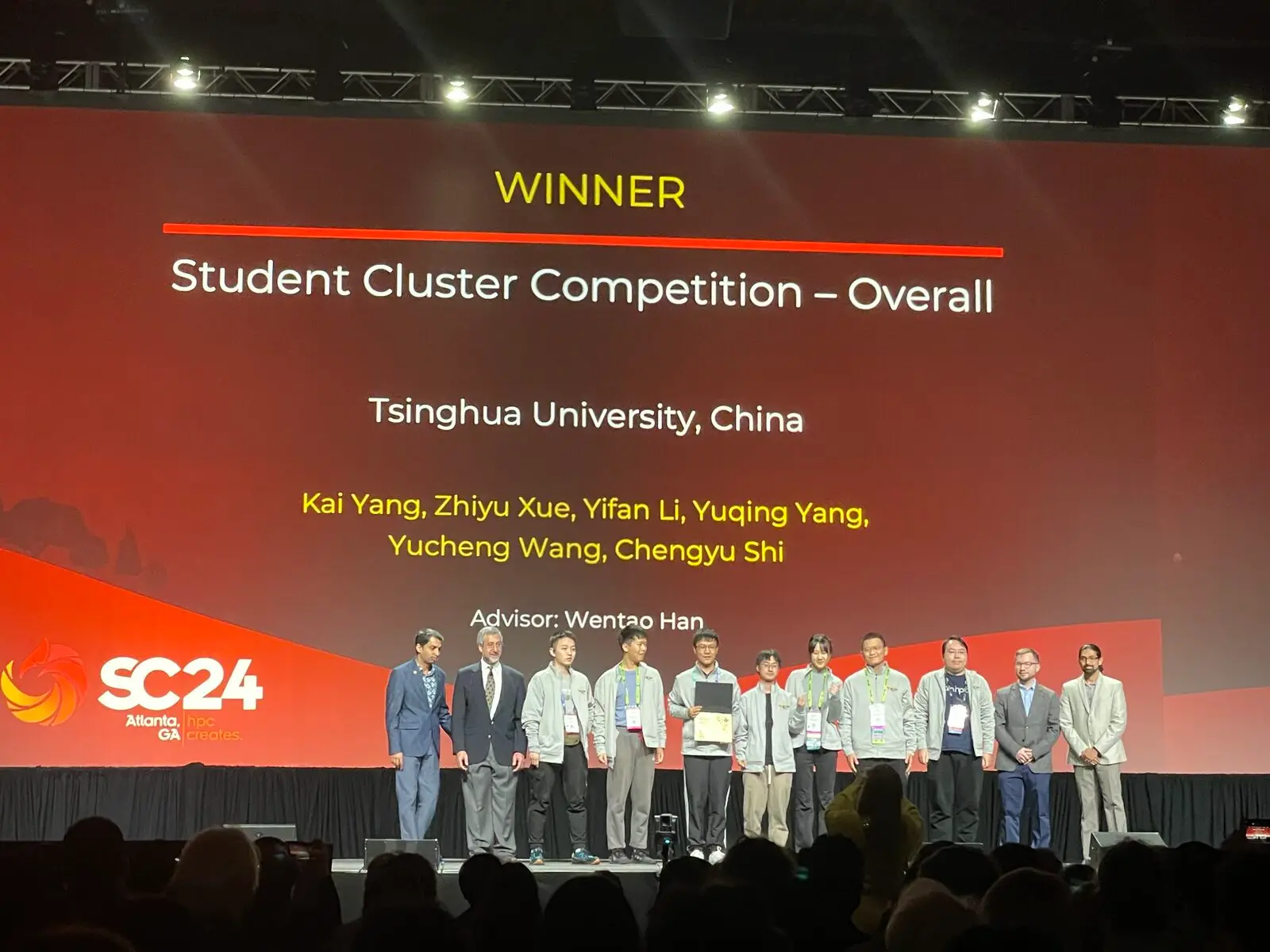
People
8 current members and 78 alumni since the class of 2008.
Questions we get asked
Do I need supercomputing experience to join?
No. The team trains new members from scratch every autumn, starting with Linux, networking and parallel programming on the team's own hardware.
Do I have to study computer science?
No. Physics, mathematics, chemical engineering and astronomy students have all competed for the team. A solid programming foundation matters more than the department.
Which years can apply?
Any. First-years through graduate students are welcome, and most members stay for several competition seasons.
When and how does recruitment happen?
Every autumn semester. Follow the team's WeChat account or contact one of the faculty advisors through their homepage.
Can my research group work with the team?
Yes, at any time of year. Bring a concrete computational problem, such as a simulation that is too slow or a data pipeline that does not scale, and the team will scope it with you.
Research collaboration
We work with research groups on numerical simulation, large-scale data processing, AI inference and distributed systems, from the GRID gamma-ray satellites to genomics.
Work with usNew members every autumn
We recruit each autumn semester and train from scratch. Physics, mathematics and chemical engineering students have all competed for the team.
Join the team